
Last updated: September 17, 2026

Thursday, September 17, 2026

Travel News

Visa changes, border rules, passport developments and travel news from around the world. Every item linked to its official source, nothing deleted from the archive.

Travel News
Lead story
VisasNewAugust 25, 20261 min read

Montenegro introduces visas for five nationalities on 1 November 2026

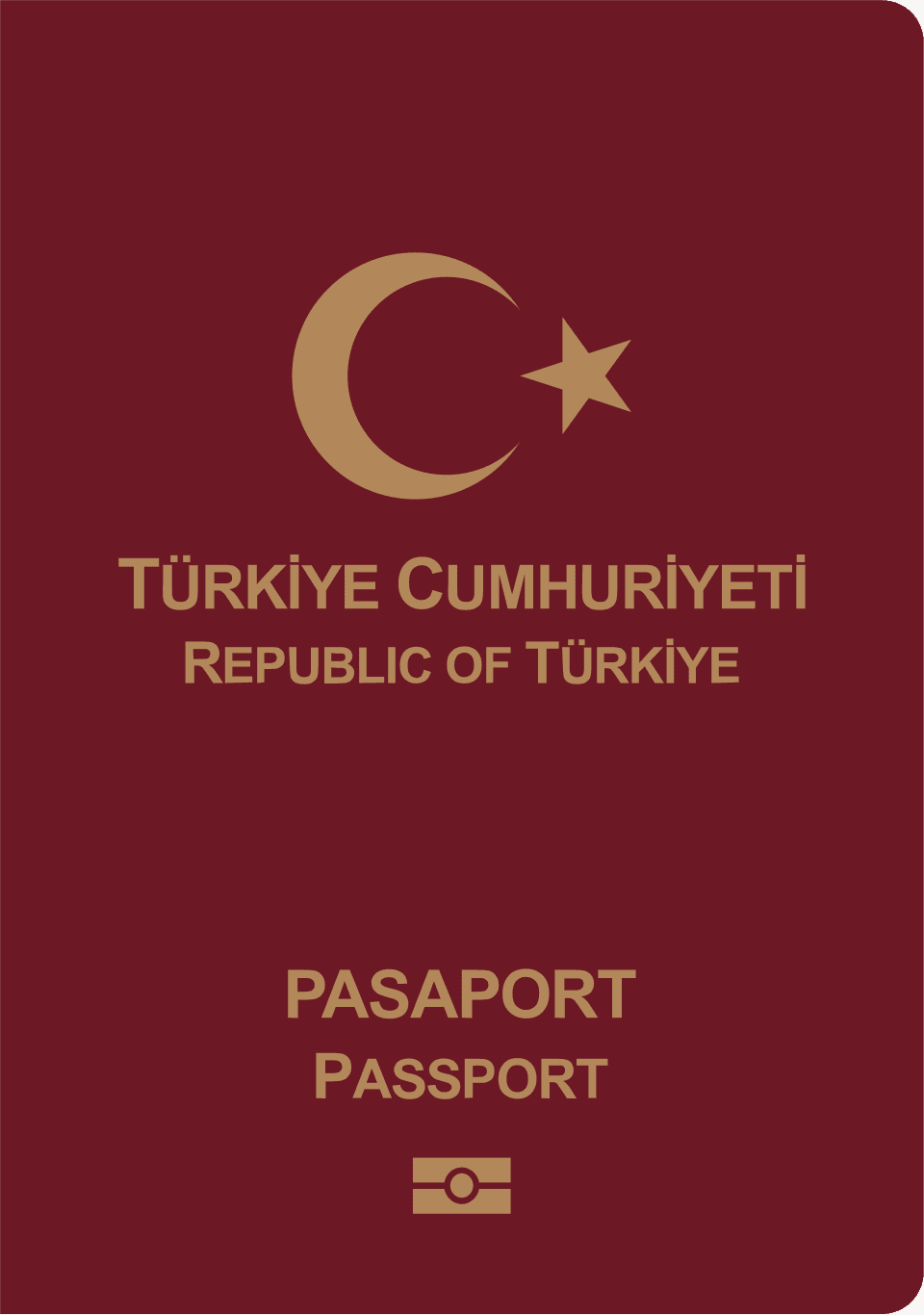
A Montenegrin government decision dated 23 July 2026, published in Official Gazette 108/2026 and in force since 25 July, ends visa-free entry for citizens of Belarus, China, Russia, Saudi Arabia and Türkiye. The requirement starts on 1 November 2026; until 31 October the current rules stand, which for most of these nationalities means visa-free stays of up to 30 days. The stated reason is alignment with the European Union's common visa policy as Montenegro works to close Chapter 24 of its accession talks. Two caveats worth knowing before you book. Whether holders of a valid Schengen, US or UK visa or residence permit will be exempt is reported inconsistently, so confirm with a Montenegrin mission rather than a news summary. And applications are not limited to embassies and consulates — VFS Global centres also accept them in several countries. If you were planning Montenegro for late autumn, moving the trip before 31 October remains the simplest answer.

Source: Montenegro Official Gazette 108/2026 (government decision of 23 July 2026)

More developments

VisasNewJuly 8, 20261 min read

ETIAS slips to 2027 — and most of the internet still says 2026

The European Union has removed the "final quarter of 2026" target for ETIAS, its €20 travel authorisation, from its official pages. eu-LISA, the agency building the system, concluded that a 2026 launch is no longer possible and the start has moved to 2027; the governing board meets in September to set a new timetable. The reason is the troubled rollout of EES, the biometric entry-exit system: Home Affairs Commissioner Brunner pointed to staffing and infrastructure gaps in member states. Two things worth keeping straight, because a great many travel pages still get them wrong. First, the date: if you read "ETIAS starts in 2026", that page has not been updated since the official target was withdrawn. Second, who it covers: ETIAS is only for nationals who may enter the Schengen area WITHOUT a visa. If your passport already requires a Schengen visa, ETIAS changes nothing for you — you will keep applying for the visa exactly as before, and you will not file an ETIAS application on top of it.

Source: Euronews Travel / Financial Times (eu-LISA kararı)
Borders & entryApril 10, 20261 min read

The passport stamp is history: EES now runs at full capacity

The European Union's Entry-Exit System (EES) has been operating at full capacity across all Schengen external borders since 10 April 2026. Every non-EU traveller — visa-free or visa-holding — gives fingerprints and a facial image on first entry. Passports are no longer stamped; the system counts your 90 days in any 180 automatically. Three practical consequences. Your first crossing after the switch takes noticeably longer, because enrolment happens at the booth. You can no longer reconstruct your stay history by flipping through stamps, so keep boarding passes and booking confirmations if you travel to Europe often. And the 90/180 count is now machine-kept: an overstay that a tired border officer might once have missed is now arithmetic. If you are close to the limit, check before you fly rather than at the gate.

Source: travel-europe.europa.eu (AB resmî)
Borders & entryJuly 30, 20261 min read

The EU's stay calculator says "OK" — for some travellers that answer is not reliable yet

The European Union has added an important caveat to the official online tool that tells you how many Schengen days you have left. Stays that began before 10 April 2026 may not be reflected in the remaining-days figure. On top of that, travellers who used an entry on a single- or double-entry visa between 12 October 2025 and 9 April 2026 may get an "OK" result that is not trustworthy up to and including 6 October 2026, because those entries were never recorded in EES. If you are in either group, do not rely on the online answer alone: work out your own past entries and exits against the 90/180 rule, keep the evidence with you, and ask the border officer to confirm. The tool is a good check, not a legal guarantee — and an overstay is charged to you, not to the calculator.

Source: European Union — official EES stay calculator
Borders & entryJuly 2, 20261 min read

Two to five hours at European border control: stop booking 90-minute connections

Since the EES went fully live on 10 April, passport control at major European airports has produced queues of two to five hours; IATA warned that peak days could reach six, and in July airports in Switzerland, Spain and Belgium reported five-hour waits. The bottleneck is first-time enrolment: capturing biometrics takes minutes rather than seconds, and it holds up everyone behind. The European Commission rejected the airports' request to suspend the system for the summer, and July and August were expected to carry roughly 40 million more passengers than the two months before. The practical advice is blunt: if this is your first Schengen entry under EES, a 90-minute connection that used to be safe is now a gamble. Treat three hours as the minimum at giants like Paris CDG, and check the airport's own live channels before you fly.

Source: Euronews / Al Jazeera (aviation industry warnings)
Borders & entryJuly 16, 20261 min read

Thailand's 60-day visa exemption is ending: the new framework is 30 days

The Tourism Authority of Thailand set out the details of the cabinet-approved visa framework on 16 July: the 60-day exemption gives way to a tiered system, and for the 59 countries and territories on the exemption list the stay drops to 30 days. Mauritius and the Seychelles move to 15 days, while Azerbaijan, Belarus and Serbia shift to visa on arrival. The five Interior Ministry announcements had not yet appeared in the Royal Gazette, and they take effect 15 days after publication. Until then the current rules apply, and travellers who enter before the change may complete the permission they were granted. If you are planning a long stay — the classic two-month low-season trip, or a remote-work stretch — price the 30-day version of your itinerary now, and check the official entry rules for your own nationality before you book the flight, because the tiers differ by passport.

Source: TAT Newsroom (Tourism Authority of Thailand, official announcement)
PracticalJuly 30, 20261 min read

Flying to Thailand: have the arrival card and proof of funds ready

The Tourism Authority of Thailand has restated that foreign visitors can be asked to show adequate funds at immigration. This is not a new rule, but it is enforced unevenly and catches people out. For visa-exemption and visa-on-arrival entries the reference figures are 10,000 baht per person and 20,000 baht per family; for a tourist visa, 20,000 per person and 40,000 per family, in cash, foreign currency or a supporting payment document. Separately, every international traveller must complete the Thailand Digital Arrival Card (TDAC) before arrival. A THIM pilot application was announced for August 2026; it does not replace the TDAC and does not create a second arrival card, so filling in one does not excuse the other. Do both the evening before you fly, not in the queue.

Source: TAT Newsroom (Tourism Authority of Thailand, visitor information)
VisasJuly 1, 20261 min read

A US visa interview in 10 business days — for an extra $750

The US Department of State launched an optional expedited-interview pilot for B1/B2 (tourist and business) visa applicants on 1 July. Applicants who pay $750 on top of the standard $185 application fee can be given an interview date within 10 business days at participating posts. The pilot runs until 31 December 2026 and is capped at 25,000 applications in total. The critical point, easy to lose in the excitement: the fee moves you up the queue and nothing else. It has no effect whatsoever on the decision, the documents you must bring, or the consular officer's assessment — paying it does not make an approval more likely. The list of participating posts is published on travel.state.gov; check that your own post is on it before paying anything.

Source: U.S. Department of State announcement / Ogletree Deakins
WorldJuly 1, 20261 min read

Japan raises visa fees for the first time in about 50 years — who actually pays

From 1 July 2026 Japan increased its visa fees for the first time in roughly half a century. Whether this touches your trip depends entirely on your passport. Travellers from the 71 nationalities that enter Japan visa-free for tourism are unaffected: the change applies to people who apply for a visa, which in practice means work, study and long-stay categories. If you do need a tourist visa for Japan, budget the new fee and apply earlier than you think you need to — summer and the autumn foliage season are the two peaks. For everyone else the more useful Japan headline is still the exchange rate: a weak yen keeps what used to be a famously expensive destination within reach of mid-range budgets.

Source: Japan visa regulations / Travel Tourister compilation

Do not miss a rule change

Visa changes and route ideas, once a week, in your inbox.

No spam. Unsubscribe whenever you like.

This page is updated regularly from official sources — EU travel authorities, national foreign ministries, tourism boards — and credible news agencies. Older stories are never deleted; they move to the archive. Think we missed something? Tell us.

Important: this content is general information

Visa rules can change without notice. Always confirm your situation with an official source before you travel: Also check with the embassy or consulate of your destination country in your own country. The information on this page is guidance, not legal advice.